Surface and finish
Can the method apply the approved product and procedure to every zone, then meet the test-area acceptance standard?
Why Drones
Drone-supported application can change an exterior-cleaning work plan, but it does not automatically make a project faster, safer, cheaper, cleaner, or disruption-free. Those outcomes must be established against the actual alternatives and site.
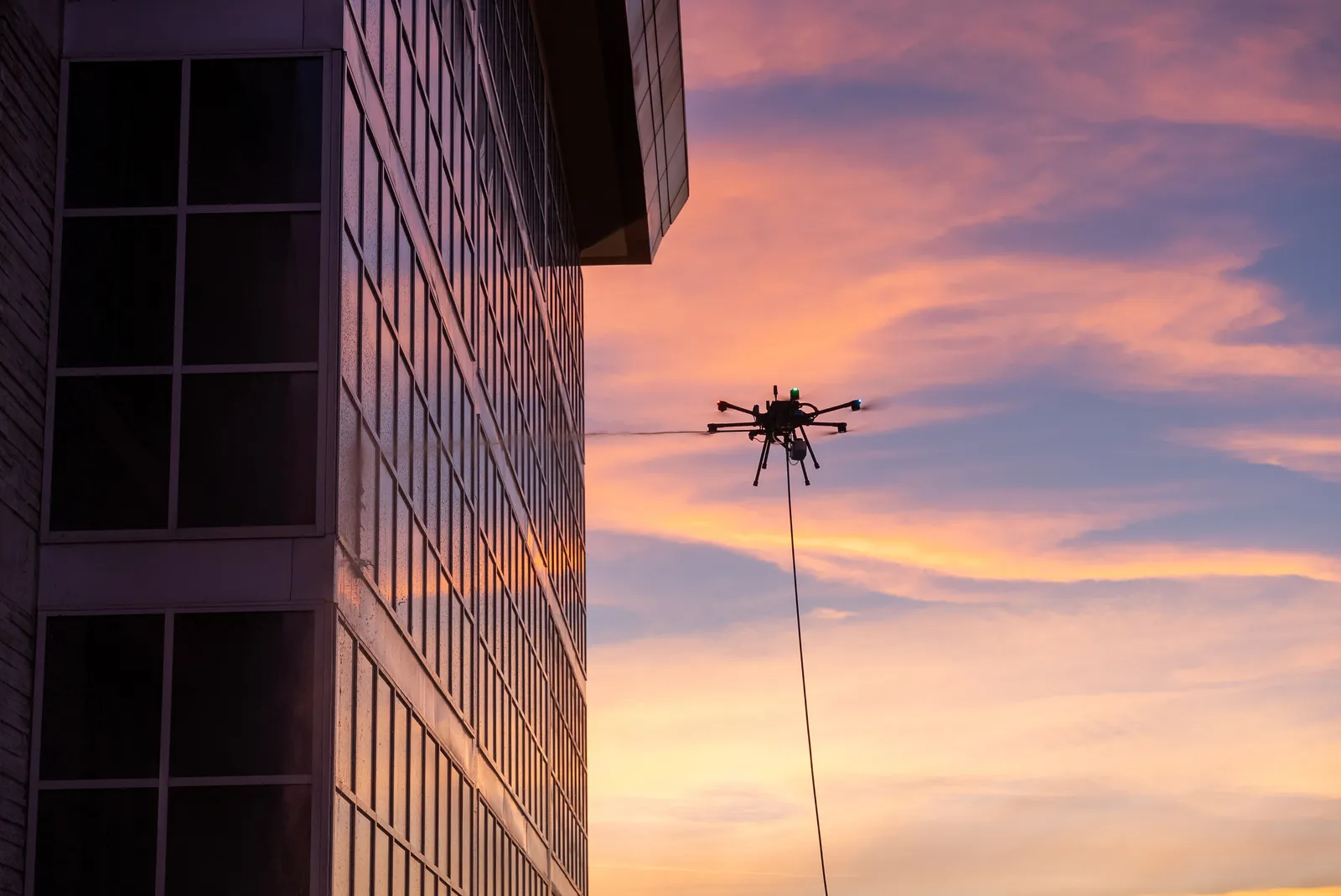
Our Cleaning Platform
The Sherpa is the drone platform in KYROCK's exterior-cleaning toolkit. It supports soft-wash, pressure-wash, and window-cleaning configurations, while the selected method, pressure, product, and access plan remain specific to each surface and site.
Explore the Sherpa cleaning drone at Lucid BotsComparison Framework
Can the method apply the approved product and procedure to every zone, then meet the test-area acceptance standard?
Where will people, aircraft, lifts, ropes, platforms, hoses, vehicles, and falling objects be during setup, work, repositioning, and teardown?
What happens to entrances, sidewalks, lanes, docks, balconies, intakes, tenants, events, production, and emergency access?
Which aviation, workplace, traffic, environmental, property, manufacturer, preservation, and owner requirements apply?
What are the real setup, test, production, weather, drying, cure, inspection, touch-up, teardown, and contingency durations?
Do the bids cover the same measured surfaces, finish, controls, documentation, assumptions, exclusions, and owner responsibilities?
Where Fit Changes
Ground-level flatwork, hands-on detailing, restoration, shielded recesses, interior courtyards, obstructed facades, sensitive sites, unsuitable airspace or weather, equipment limits, and finish requirements may favor another method. Divide the building into zones instead of forcing one access system onto every surface.
Before Award
Send the address, surfaces, condition, constraints, and finish standard for a project-specific review.
Planning ahead? Ask about an exterior condition report →